On the night of May 27, 1999, the sky over Sydney turned gold.
At the newly built Stadium Australia, 70,000 fans packed in—unsure of what they were about to witness. The One Night Only World Tour was coming to its final stop: one show per continent, one farewell to each corner of the globe. But this night felt different. Heavier. Louder. More fragile.
Just weeks earlier, whispers had circulated in the press. Barry Gibb, the voice, the heartbeat of the Bee Gees, was in serious pain. Heart issues. Nerve trouble. Vocal strain. Doctors warned him to cancel. Family and friends pleaded for rest. Even Barry admitted later, “There was a moment I thought that was it.”
But when the lights came on—and the crowd roared in unison—Barry stepped onto that stage as if pulled by something bigger than his own body
A Stadium, A Statement, A Last Stand
Stadium Australia, freshly completed for the upcoming 2000 Olympics, had never hosted a concert before. The Bee Gees were making history just by showing up.
But they didn’t just show up. They delivered a show that would become a legend.
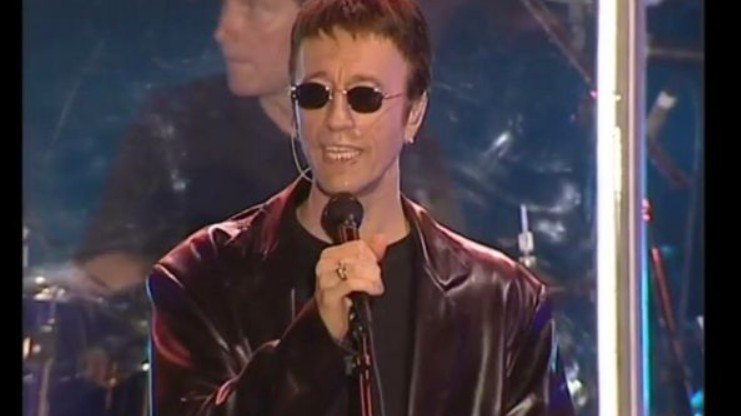
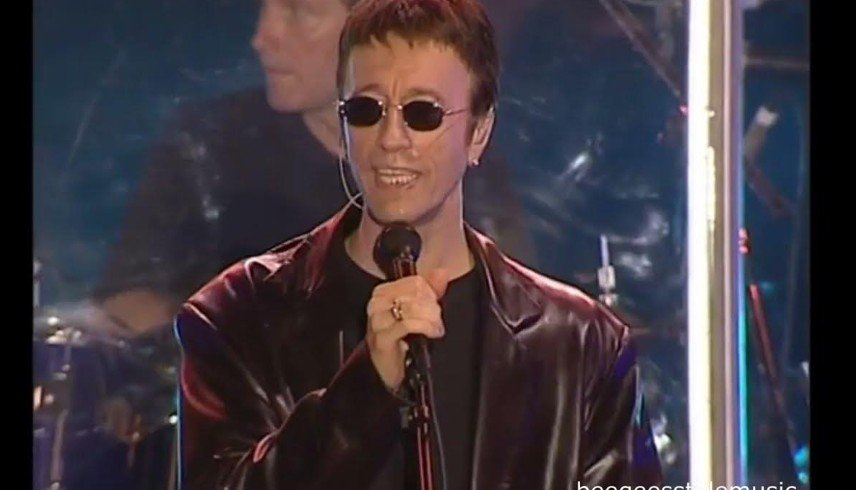
From the opening beats of “You Should Be Dancing” to the heart-melting harmonies of “How Deep Is Your Love”, the brothers—Barry, Robin, and Maurice—brought their catalogue of hits to life with a rawness that stunned even longtime fans. This wasn’t polished pop. This was pain, love, defiance, and legacy—set to music.
“We Didn’t Know If He’d Make It Through the Night”
People backstage recall the tension. Barry had been physically exhausted for weeks. His left hand was barely functioning due to nerve issues. His chest ached with every note. But somehow, he kept going.
At one point during “Too Much Heaven,” his voice cracked—not from weakness, but from emotion. As Robin gently stepped in beside him, their harmonies collided in a way that felt like a final embrace.
“You could feel it,” one crew member said. “This wasn’t just a show. It was the end of something sacred.”
The Final Goodbye They Never Called Final
The Bee Gees never officially announced that Sydney would be their last stadium performance. But fans knew. Barry knew. Robin and Maurice knew.
There was a moment—right after “Stayin’ Alive”—when the music stopped, and Barry turned to look at his brothers. No words were spoken. Just a silent nod. A knowing glance. And the sound of 70,000 people holding their breath.
Then came “Tragedy.” And it was anything but.
They lit the night on fire.
A Legacy Burned Into the Sky
As the final note rang out, the sky above Sydney erupted in fireworks. Fans wept. The Royal Family, present in a private box, stood and applauded. And the brothers Gibb—drenched in sweat and tears—took their final bow.
No one knew it would be Maurice’s last big-stage performance before his sudden passing in 2003. No one could imagine that Robin, too, would be gone within a decade.
But on that night, the Bee Gees were eternal.
“It Was a Miracle”
To this day, fans call May 27, 1999 the greatest Bee Gees performance of all time. Not because it was perfect—but because it was real.
Because Barry Gibb walked out when no one thought he could.
Because music kept him alive, even just for one more night.
Because some farewells aren’t planned.
They’re felt.
And that night in Sydney?
We all felt it.